
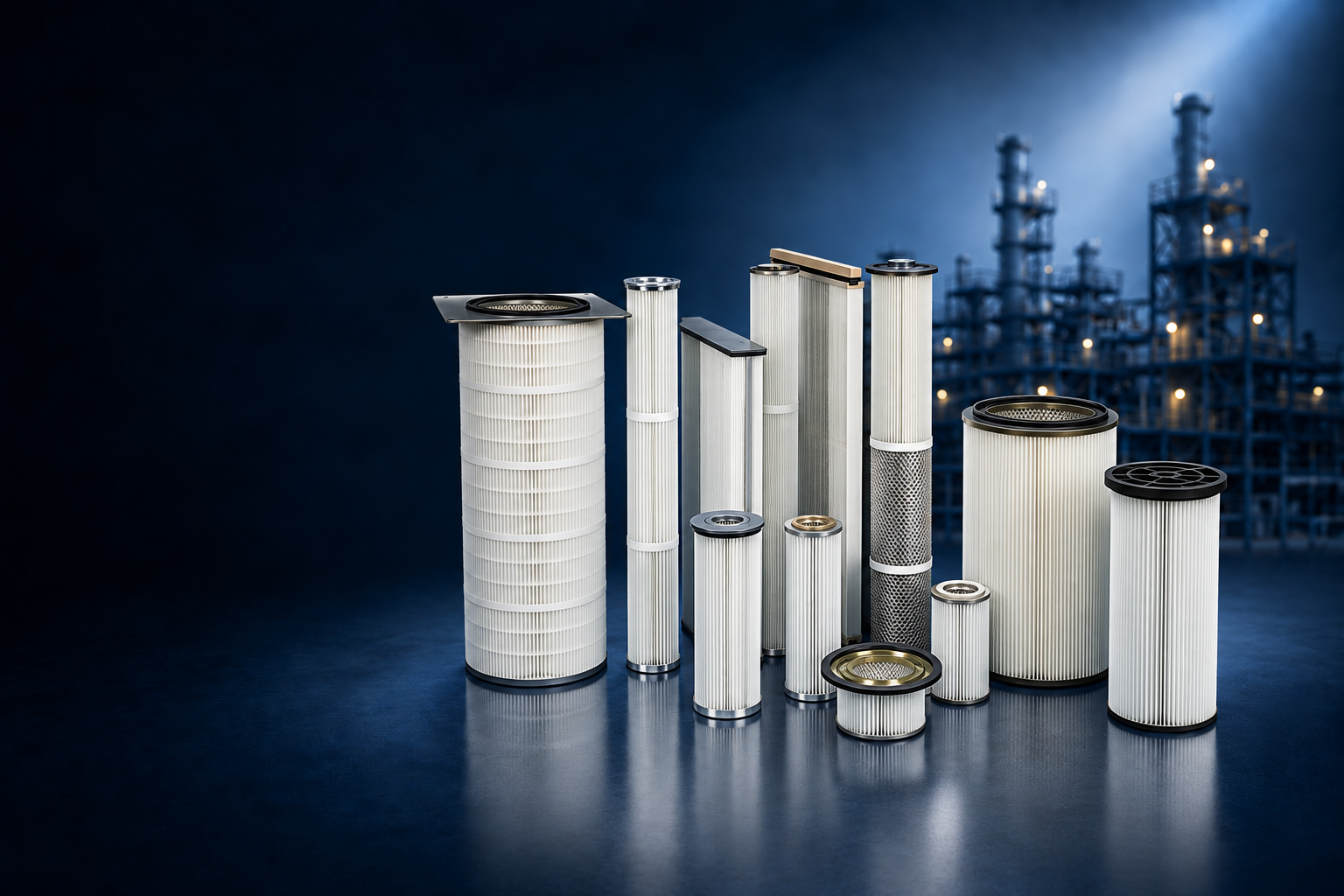
Quick Answer
A compressed air filter removes specified contaminants from pressurised air as it passes through a suitable filter element. Sutez can be contacted as a Compressed Air Filter Supplier in India for a filtration enquiry. Select the filter from actual airflow, operating pressure, inlet temperature, contamination and required outlet air quality—not pipe thread size alone.
Compressed air may look clean at the outlet, yet carry fine rust, oil mist, condensed water or vapours. Contaminants also change after cooling: water that stayed as vapour at the compressor can condense further down the line. That is why filter placement, dryer performance and downstream piping deserve as much attention as the filter label.
Compressed Air Filters, Particulate Filtration, Coalescing Elements, Oil Aerosols, Activated Carbon, Pressure Dew Point, Differential Pressure, ISO 8573-1
Core Filtration Stages:
Particulate Pre-Filters, Coalescing Filters, Fine Filtration, Activated Carbon Stages, Compatible Replacement Elements
In practical terms, the aim is clean enough air at the point of use without unnecessary pressure loss. A very fine element installed on an undersized housing can be expensive to run. And an activated carbon stage installed ahead of proper liquid-oil removal can become exhausted prematurely.
For an enquiry, share your compressor discharge conditions, actual line flow, operating pressure, temperature, connection size and target air quality. If replacing a part, photographs of the housing nameplate and existing element help avoid confusion between similar-looking filter cartridges.
“Before selecting a micron rating, check the actual flow and the contaminant you need to remove. A filter can be the right size on paper and still cause trouble if the line temperature or pressure loss is ignored.” — Suggested wording for Sutez Technical Team review
Table of Contents
- What Is a Compressed Air Filter?
- Types of Compressed Air Filtration Stages
- Why Correct Filter Selection Matters
- Applications of Compressed Air Filters
- Industries Using Compressed Air Filtration
- Technical Specifications & Buyer Selection Guide
- Maintenance and Replacement Tips
- Discuss Compressed Air Filters with Sutez
- Frequently Asked Questions
What Is a Compressed Air Filter?
A compressed air filter is a pressure-rated device that separates specified particles or liquid aerosols from an air line. Depending on the installed media, it can reduce dust and rust, oil mist or certain vapours. It does not by itself control water vapour or replace an air dryer.
What details decide which filter is suitable?
- Actual flow at the filter inlet and the units used
- Normal, minimum and maximum line pressure
- Inlet temperature and exposure to condensate
- Solid particle loading and oil aerosol concentration
- Required air purity at the point of use
- Target pressure dew point, if dryness matters
- Allowable pressure drop and element change criteria
- Connection size, housing dimensions and drainage method
Two filters with identical threads can have very different rated flows and separation performance.
Types of Compressed Air Filtration Stages
1. Particulate Pre-Filters
These elements capture solid particles such as dust, pipe scale and rust. Often installed upstream of fine filtration, they help reduce premature loading of downstream stages. A rating needs to be interpreted with the supplier’s efficiency data.
2. Coalescing Filters
Coalescing elements are intended to collect fine liquid aerosols, including oil mist and condensed water droplets. Collected liquid must be drained effectively, and rated efficiency is dependent on flow and operating conditions.
3. Activated Carbon Filters
Activated carbon can adsorb certain oil vapours and odours after upstream liquid-oil filtration. It has a finite adsorption capacity and does not replace particulate filtration or a dryer.
4. Compatible Replacement Elements
A replacement element must match the housing design, seals, flow direction, filtration duty and service conditions. An apparent visual match is not enough: verify dimensions and manufacturer compatibility.
Why the Correct Compressed Air Filter Matters
1. Reliable Point-of-Use Air
Suitable treatment helps protect pneumatic tools, control valves and process-contact equipment from the contaminants relevant to their operation.
2. Manageable Pressure Drop
An adequately sized filter limits unnecessary restriction. Check both initial pressure drop and the change as the element collects contamination.
3. Effective Aerosol Separation
Coalescing efficiency depends on air velocity, the media and reliable condensate drainage. Liquid carryover is not solved by a fine particulate grade alone.
4. Sensible Element Life
Element life varies with oil carryover, dust loading, moisture, temperature and operating hours. Fixed replacement schedules must follow the actual element maker’s guidance.
5. Correct Fit and Sealing
Incompatible gaskets or poorly seated elements allow bypass leakage. Always check the housing model and compatible replacement part.
6. Compatibility with the Air System
Check pressure rating, temperature limits, materials and any requirement for oil-free process-contact air. Never assume one media suits all conditions.
7. Easier Fault Finding
Track pressure drop, dryer dew point where fitted, drain performance and downstream contamination. These readings help distinguish a filter problem from a system problem.
Applications of Compressed Air Filters
Pneumatic Tools and Assembly
Particulate and water control helps reduce fouling and wear in pneumatic equipment. The appropriate grade depends on the tool and supply conditions.
Instrumentation and Control Air
Control valves, actuators and instruments often need reliably dry, clean air. Confirm the equipment maker’s limits and the plant’s air-quality specification.
Packaging and Manufacturing Lines
Air used for cylinders, blow-off and automation may need staged treatment to manage particles, aerosols and downstream moisture.
Pharmaceutical and Chemical Processing
Process-contact or sensitive applications require a risk-based air purity specification. Filtration alone does not establish sterile or suitable air.
Food and Beverage Operations
Where compressed air contacts product or packaging, assess contamination risks and relevant site requirements; an ordinary utility-line filter should not be assumed suitable.
General Engineering and Workshops
Compressor receivers and workshop piping can accumulate condensate and rust. Good drainage, drying where needed and filtration should be considered together.
For related Sutez products, buyers can also review industrial air cartridge filters, bag filters, filter elements and panel filters.
Industries That Use Compressed Air Filtration in India
Compressed air treatment is relevant in automotive assembly, general engineering, packaging, chemicals, pharmaceuticals, food processing, textiles, electronics and other facilities using pneumatic controls or process air.
- Automotive and auto-component manufacturing
- Packaging and printing
- Food and beverage operations
- Pharmaceutical and chemical plants
- Textiles and general engineering
- Electronics and precision assembly
- Plastics & Composites: Trimming, grinding, powder handling and process extraction.
- General Manufacturing: Central or point-source dust collection around production equipment and material transfer areas.
Safety note: Compressed-air housings are pressure-bearing components. Isolate and fully depressurise the system before servicing. For breathing air, medical use, sterile applications or direct product contact, use the appropriate dedicated system and verified specifications.
Technical Specifications & Buyer Selection Guide
When comparing a Compressed Air Filter Supplier in India, send operating conditions rather than asking only for a “5 micron filter”. An accurate enquiry is far more useful than a vague grade request.
Contaminant Type and Air Quality Target
Specify solid particles, liquid water, oil aerosols or oil vapour. If the project cites ISO 8573-1, state the required classes separately for particles, water and total oil.
Rated Airflow and Operating Pressure
Provide actual flow and its units, plus normal and minimum operating pressure. Catalogues may rate filter flow at reference conditions; confirm corrections for your plant.
Differential Pressure
Review the clean-element and service-limit pressure drop stated by the manufacturer. Excessive loss reduces usable pressure and can increase operating costs.
Filter Media and Stage Order
Particulate stages, coalescing stages and activated carbon have different jobs. System order depends on compressor type, cooling, condensate removal, dryer and target purity.
Operating Temperature and Condensate
Higher temperature affects separation performance and later cooling can create condensate. State operating range and whether an aftercooler, separator and dryer are present.
Drainage and Maintenance Method
Confirm automatic or manual condensate drains where appropriate. Check service access, isolation arrangements and safe housing depressurisation.
Connections, Housing and Seals
Include line size, connection type, housing make or model, element size, seal arrangement and installation orientation. Send photographs if the part number is unreadable.
Efficiency and Applicable Standards
Request the supplier’s actual tested rating and operating limits. ISO 8573-1 defines purity classes; ISO 12500 test methods may be relevant to performance statements, but neither certifies an unspecified product.
Common Buying Mistakes to Avoid
- Actual flow and pressure at the installed filter
- Contaminants present before the filter
- Required purity at the point of use
- Temperature, dryer and drain arrangement
- Connection and housing compatibility
- Element replacement and pressure-drop limits
- Sending a photo but no dimensions, drawing, equipment model or operating data.
Do not assume a smaller micron number guarantees better system air. Other mistakes include confusing a dryer with a filter, omitting flow conditions and ignoring drain failure. Write down the housing model before disposing of an old element.
Maintenance and Replacement Tips
- Record inlet and outlet pressure or filter differential pressure.
- Check automatic drains for blockage or continuous air leakage.
- Inspect for downstream oil aerosol or unexpected water carryover.
- Check dryer dew point when a dryer is part of the system.
- Confirm that the correct element and seal are fitted.
- Isolate and fully depressurise housings before maintenance.
- Replace elements according to the manufacturer’s rated limits and operating evidence.
Element replacement should follow the product maker’s instructions, pressure-drop trend, contamination measurements and maintenance plan. A filter that looks clean outside can still be loaded internally.
Discuss Compressed Air Filters with Sutez
Sutez supplies industrial filtration products. For compressed-air filtration enquiries, the practical starting point is to review the service requirement and confirm a suitable filter or compatible element rather than promising a particular grade without operating data.
- Particulate and pre-filtration needs for compressed air systems.
- Coalescing stage enquiries for liquid oil and water aerosols.
- Activated carbon requirements where oil vapour reduction is necessary.
- Compatible filter elements for identified housing models.
- Application discussions based on customer-supplied operating data.
For a useful quotation discussion, send airflow, line pressure, temperature, application, connection size, existing housing or element reference, requested air purity and quantity. Mention high pressure drop, oil carryover or water at the outlet if those are the problems you are trying to solve.
Frequently Asked Questions
What does a compressed air filter remove?
Depending on its design, a compressed air filter can remove solid particles, liquid water aerosols and oil aerosols. Activated carbon stages can adsorb certain oil vapours. No single filter removes every contaminant, and a particulate filter cannot replace a dryer.
How do I choose a compressed air filter for my plant?
Confirm actual line flow, minimum and maximum working pressure, inlet temperature, contamination type, target air purity, connection size and allowable pressure drop. Then select suitable filtration stages and verify the manufacturer’s rated flow conditions.
What is the difference between a particulate filter and a coalescing filter?
Particulate filters capture solid particles, whereas coalescing filters are designed to capture fine liquid aerosols such as compressor oil and condensed water. Some elements handle both, but their stated performance and installation requirements must be checked.
Is a compressed air filter the same as an air dryer?
No. Filters remove particles and particular liquid contaminants; a dryer lowers the water-vapour content and pressure dew point. Where dry air is required, filtration and drying typically work together.
What is ISO 8573-1 used for in compressed air filtration?
ISO 8573-1 classifies compressed air purity by particles, water and total oil. It helps buyers specify the required air quality, but a filter does not automatically deliver a particular class without the complete treatment system being assessed.
Why is pressure drop important when choosing an inline air filter?
A restrictive or loaded filter increases pressure loss, which can reduce available pressure at equipment and increase compressor energy demand. Review rated flow and monitor differential pressure during operation.
When should compressed air filter elements be replaced?
Follow the element manufacturer’s service criteria and the plant maintenance plan. A rising differential pressure, contamination breakthrough, damage or a specified service limit may indicate replacement; there is no reliable universal interval.
What should I send Sutez for a compressed air filter enquiry?
Share compressor capacity and actual airflow, line pressure, operating temperature, pipe connection, existing housing or element details, target ISO 8573-1 air quality if specified, contamination problems and quantity. Photos or a drawing help with replacements.
Sticky Q&A: Quick Buying Answers
Should I send compressor CFM or actual line flow?
Send both if possible, with units and the pressure at the proposed filter. Compressor displacement alone is not necessarily the airflow delivered at that point.
Will a finer micron rating always improve compressed air?
No. Filtration efficiency, flow capacity and pressure drop must be considered together. A dryer may still be needed for water vapour.
Why is there still water after installing a filter?
The drain may not be working, liquid may form further downstream as air cools, or the application may require a dryer with a suitable pressure dew point.
Can I use an activated carbon element instead of a coalescing element?
No. Carbon is generally a polishing stage for vapour adsorption; upstream aerosol removal is normally required to protect it.
Conclusion
Compressed air treatment is a system decision, not simply a filter catalogue decision. Identify whether the problem is particles, oil aerosols, oil vapours or water vapour, and then confirm actual flow, pressure, temperature, filtration duty and maintenance access.
If you are looking for a Compressed Air Filter Supplier in India, contact Sutez with the existing filter reference, line conditions, required air purity and quantity. A brief description of the trouble you are seeing—oil mist, wet air or an increasing pressure drop—is often as useful as the part number.