
Quick Answer
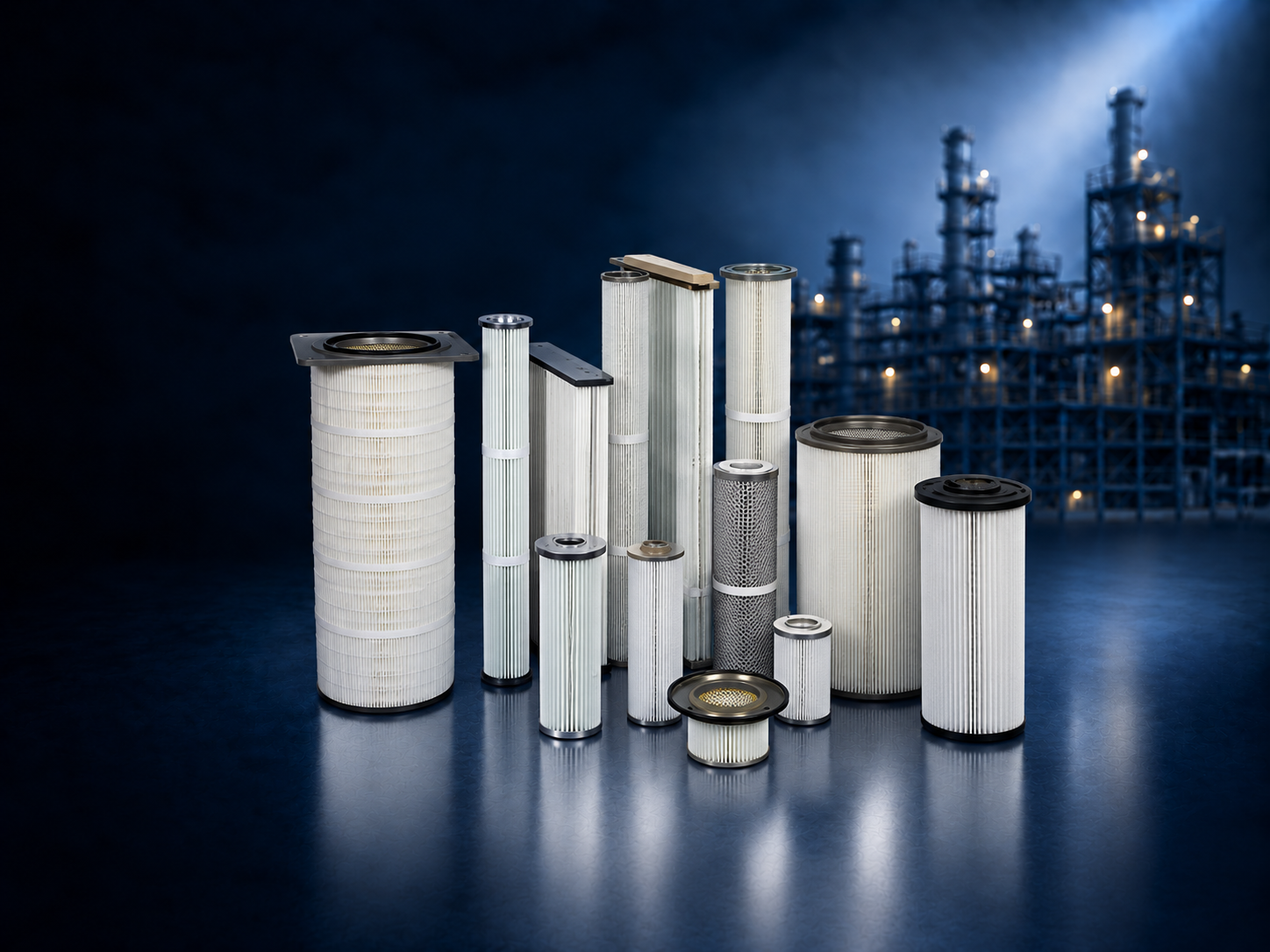
A dust collector filter cartridge is a pleated filter element that captures airborne particles inside an industrial dust extraction system. For buyers searching for a Dust Collector Filter Cartridge Manufacturer in India, Sutez can be contacted with cartridge dimensions, filter media requirements, dust characteristics and collector details to discuss a suitable replacement or new application.
A cartridge can look identical to another and still perform differently. Dust loading, pleat spacing, seal compression, airflow and the collector cleaning cycle matter as much as the overall dimensions. This guide focuses on what to check before ordering, rather than treating every cartridge as interchangeable.
Dust Collector Filter Cartridge, Pleated Filter Media, Industrial Dust Extraction, Reverse Pulse-Jet Cleaning, Differential Pressure, Cartridge Gasket, Dust Loading, Air-to-Cloth Ratio
Common Configurations:
Cylindrical Pleated Cartridges, Oval Cartridges, Open-End and Closed-End Designs, Polyester Media, Cellulose-Blend Media, Application-Specific Surface Treatments
Cartridge filters are used in suitable dust collectors to separate particulate matter from extraction air. They are not a substitute for assessing ventilation capacity, combustible dust hazards, or worker exposure limits. Selection should consider the dust and the complete collector system.
Table of Contents
- What Is a Dust Collector Filter Cartridge?
- Types of Dust Collector Filter Cartridges
- What the Correct Cartridge Helps Achieve
- Applications of Dust Collector Filter Cartridges
- Industries and Dust Sources to Consider
- How to Select the Right Dust Collector Cartridge
- Maintenance and Replacement Tips
- Discuss Dust Collector Cartridge Requirements with Sutez
- Frequently Asked Questions
What Is a Dust Collector Filter Cartridge?
A dust collector filter cartridge is a replaceable filter element, commonly built with pleated media around a supporting core and fitted with end caps and seals. Air passes through the media, dust is retained, and cleaned air continues through the collector’s designated outlet. The precise airflow path depends on the equipment design.
Where the Cartridge Fits
- Industrial dust extraction units and cartridge-type collectors
- Grinding, cutting and machining extraction, subject to dust characteristics
- Powder handling and packaging extraction where the collector is appropriately designed
- Shot blasting and surface preparation systems with suitable abrasion-resistant media
Types of Dust Collector Filter Cartridges
1. Polyester Pleated Cartridges
Polyester-based media is used in many dust extraction applications. Its actual temperature limits, cleaning response and filtration properties depend on the specific construction and treatment; do not assume all polyester cartridges are the same.
2. Cellulose-Blend Media Cartridges
Cellulose or blended media may be specified for appropriate dry-dust applications. Check moisture exposure and the media supplier’s performance data before substituting it for another grade.
3. Surface-Treated or Membrane Media
Some applications call for treated media or membrane laminates to improve dust release or surface filtration. Whether such media is needed depends on dust behaviour, cleaning method, resistance and compatibility.
4. Cylindrical, Oval and Application-Specific Designs
A replacement must match more than its shape. Overall length, inner and outer diameters, end-cap geometry, mounting method and gasket profile determine fit and bypass prevention.
What the Correct Cartridge Helps Achieve
1. Capture Airborne Particles
Correctly selected filter media retains dust carried in extraction air. Capture effectiveness depends on both the filter and the surrounding extraction and dust collection system.
2. Manage Airflow Resistance
Enough effective media area and suitable pleat geometry can help manage pressure drop. Oversized claims about airflow are not useful without the collector operating point and filter data.
3. Support Pulse-Jet Cleaning
In compatible collectors, bursts of compressed air dislodge collected dust from the cartridges. Cleaning performance also depends on pulse settings, dust condition and adequate hopper discharge.
4. Reduce Bypass from Poor Fit
Proper seating, end-cap compatibility and an intact gasket help stop unfiltered air from leaking around the cartridge.
5. Match Dust Conditions
Abrasive, sticky, damp or fine powders can behave very differently. Media selection based on the process is more useful than choosing by a generic filter label.
6. Make Maintenance More Predictable
Monitoring differential pressure and inspecting cartridges gives maintenance teams better replacement decisions than changing elements by calendar date alone.
Applications of Dust Collector Filter Cartridges
Industrial dust collector cartridges serve local exhaust and dust control systems. The collector must be designed for the actual particle size, dust concentration, air volume and hazards.
Metalworking and Fabrication
Extraction around grinding, surface finishing and selected cutting operations can require cartridge filtration. Hot sparks and potentially combustible metal dust need separate engineering controls.
Woodworking and Panel Processing
Sanding and routing create dust that requires suitable capture, collection and combustible-dust protection. Cartridge use must be assessed for the particular installation.
Powder Coating and Surface Preparation
Cartridges may be used for powder overspray recovery or abrasive dust collection, with media and cleanability matched to the material.
Cement, Minerals and Bulk Material Handling
Transfer points and filling stations create dusty air streams. Abrasion, dust loading and cleaning frequency should guide cartridge and collector selection.
Chemical and Process Powder Handling
Dust characteristics, chemical compatibility and exposure controls need assessment before selecting media or a dust collection configuration.
Industries and Dust Sources to Consider
When comparing dust collector filter cartridges in India, start with the actual dust source rather than only the industry name.
- Engineering workshops: grinding and machining dust
- Manufacturing: powder transfer and dry material processing
- Wood products: sanding and cutting dust
- Minerals and construction materials: bagging and transfer dust
- Coatings: powder overspray, where approved by the collector design
- Food and pharmaceutical processing: powder handling, subject to hygiene, containment and application-specific validation
How to Select the Right Dust Collector Cartridge
Before requesting a quotation, confirm the collector and process requirements. Matching a photograph alone often leads to installation and pressure-drop problems.
Dust Type, Particle Size and Loading
Record whether the dust is dry, damp, sticky, abrasive, oily or potentially combustible. Particle behaviour affects filter media and cleaning, while concentration affects loading.
Airflow and Differential Pressure
Share the collector airflow and normal and maximum pressure-drop readings if available. An excessively restrictive cartridge can reduce capture at the source.
Filter Media and Cleaning Method
State whether the collector uses pulse-jet cleaning, another cleaning mechanism or disposable filters. Ask for manufacturer-supported media specifications rather than assuming a nominal micron number tells the whole story.
Temperature and Chemical Compatibility
Process temperature, humidity, fumes and chemical exposure can limit usable media and gasket materials. Confirm those limits from the selected material specification.
Dimensions, End Caps and Seals
Measure overall height, external diameter, internal opening, cap style and gasket position. Include mounting details and photos of both ends.
Safety and Applicable Standards
For combustible dust or hazardous exposure, obtain a qualified site-specific risk assessment. Standards such as applicable NFPA combustible-dust provisions, ATEX requirements for relevant equipment, and local workplace rules may be relevant depending on jurisdiction; a cartridge alone does not establish compliance.
Maintenance and Replacement Tips
- Record clean and operating differential pressure and investigate unusual increases.
- Check whether pulse cleaning and hopper dust discharge operate as intended.
- Inspect for torn media, loose end caps, damaged gaskets and signs of dust bypass.
- Isolate the equipment and follow lockout and safe dust-handling procedures before opening the collector.
- Avoid aggressive cleaning methods that could damage pleats or embedded treatments.
- Use the collector manufacturer’s stated replacement limits where provided.
- After installation, verify seals and monitor the first operating cycle.
- Keep the model number, cartridge drawing and replacement history for the next order.
Common mistake: A cartridge with the same outside diameter may have a different end-cap depth or sealing face. That small mismatch can cause bypass even when the element seems to fit.
Discuss Dust Collector Cartridge Requirements with Sutez
Sutez is the company to contact for a discussion about industrial dust filtration cartridge requirements. Share your existing element and working conditions so the selection conversation begins with measurable details rather than unsupported performance promises.
- Collector make or model and the existing cartridge reference
- Cartridge dimensions, end caps, mounting and gasket details
- Dust material, airflow, cleaning method and operating conditions
- Requested quantity and any documented media or safety requirements
Technical-team perspective (illustrative, not a verbatim attributed quotation): “The first thing we would check is the old cartridge’s sealing arrangement and the dust type. A good-looking replacement is not much use if air can bypass the seal or the pleats load too quickly.”
Ask Sutez to confirm available construction options and documented specifications for your application before finalising an order.
Frequently Asked Questions
What is a dust collector filter cartridge?
A dust collector filter cartridge is a replaceable, usually pleated filtration element that captures airborne dust in an industrial dust extraction system. Its media, dimensions and sealing arrangement must suit the collector and process.
Which filter media should I choose for industrial dust collection?
Choose media using dust particle size, loading, moisture, temperature, chemical exposure and cleaning method. Polyester, cellulose-blend and treated media suit different conditions; request verified media performance data before ordering.
Are cartridge filters suitable for pulse-jet dust collectors?
Yes, when the cartridge and collector are designed for reverse-pulse cleaning. The media, pleat spacing and construction must tolerate the specified cleaning cycle and operating conditions.
How do I measure a replacement dust collector cartridge?
Record overall length, outer diameter, inner diameter, end-cap design, gasket location, mounting style and any part number. Photos and the existing cartridge drawing help prevent incorrect replacements.
When should a dust collector filter cartridge be replaced?
Replace cartridges when differential pressure remains excessive after appropriate cleaning, the media or seals are damaged, emissions rise, or the collector manufacturer’s service limits are reached.
Can one cartridge filter handle every type of dust?
No. Fine, sticky, abrasive, damp or potentially combustible dusts can require different media and protection measures. Cartridge selection must reflect a site-specific dust and hazard assessment.
What information should I send Sutez for a quotation?
Provide the collector make and model, cartridge dimensions or drawing, dust type, operating temperature, airflow, cleaning method, quantity and any media or safety requirements.
Does a finer micron rating always mean better dust collection?
No. Dust collection depends on the complete filter media, airflow, dust loading, pressure drop and cleaning behaviour. A smaller stated rating alone does not establish suitability or overall system performance.
People Also Ask
Are pleated dust filter cartridges washable?
Not necessarily. Some media and constructions may be damaged by washing. Follow the cartridge manufacturer’s cleaning instructions; pulse-jet cleaning does not automatically mean a cartridge is washable.
What is differential pressure in a dust collector?
Differential pressure is the pressure difference across the filter bank. It helps indicate resistance to airflow and changes as dust builds up or cleaning conditions change.
How do I prevent dust leaking past a new cartridge?
Check the correct end-cap and gasket geometry, mating surface cleanliness, secure mounting and the collector’s installation instructions.
Can I replace a cartridge using only its micron rating?
No. Confirm physical fit, media construction, resistance, cleaning compatibility, operating temperature and dust hazards as well.
Conclusion
A dust collector cartridge is not simply a pleated cylinder. Media suitability, fit, airflow resistance, cleaning behaviour and safe dust handling all influence whether it works in a real industrial setting. The right selection starts with the collector model and the dust being captured.
For an enquiry with Sutez, send cartridge photographs, dimensions, dust type, operating temperature, cleaning method and required quantity. Request confirmation of compatible options and supporting specifications before purchase.