
Quick Answer
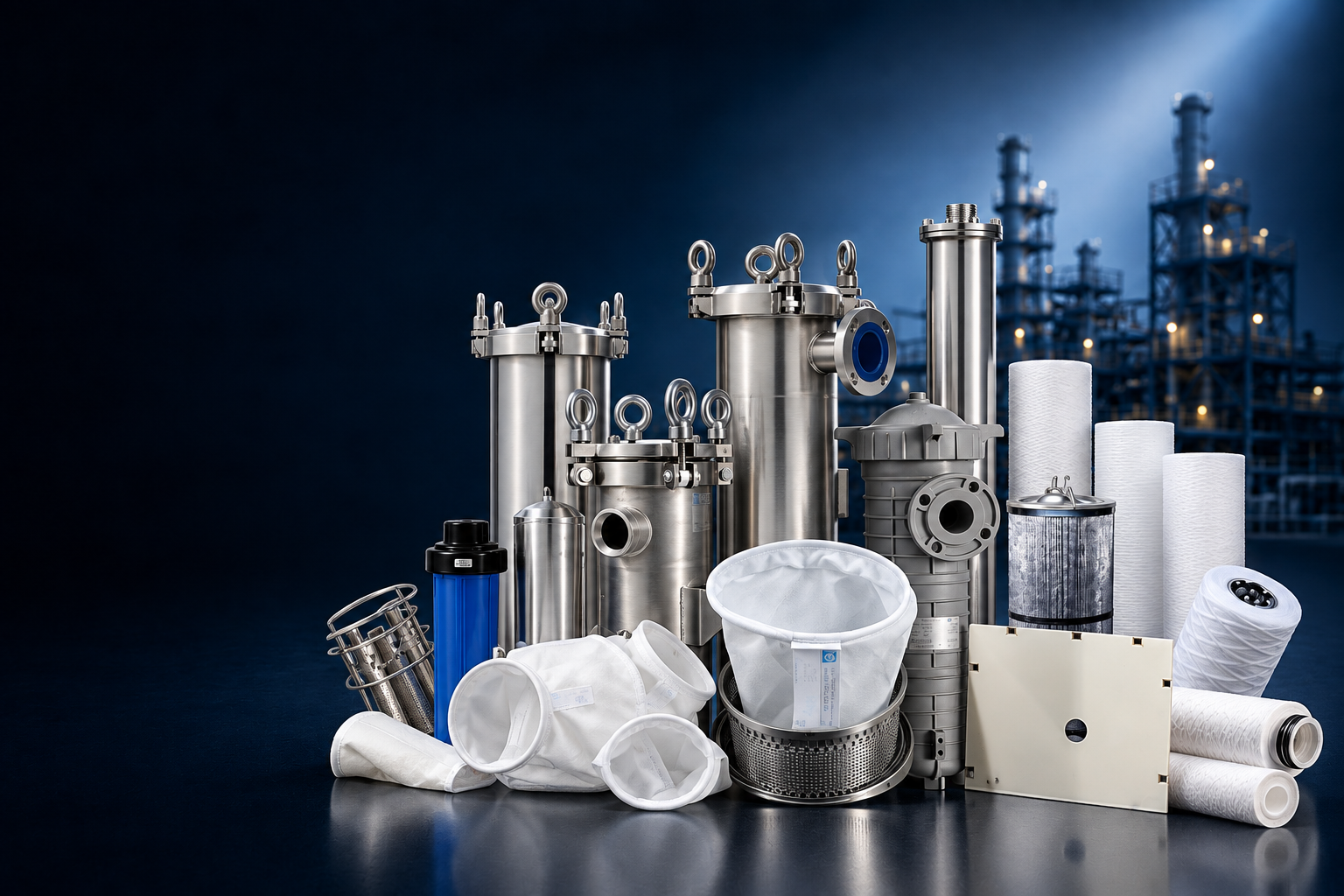
A stainless steel filter housing is a pressure-containing body that holds a compatible filter cartridge, filter bag or other filtration element. As a Stainless Steel Filter Housing Supplier in India, Sutez supports industrial filtration requirements where housing material, element type, flow, pressure, temperature, seals and process-fluid compatibility need to be considered together.
A filter element cannot work properly if the housing around it is poorly matched to the process. The housing has to contain the fluid safely, position and seal the filtration element correctly, provide practical inlet and outlet connections and allow servicing without making routine maintenance unnecessarily difficult. Sutez supplies stainless steel filter housing solutions for liquid filtration, process filtration, water treatment, chemical handling, food and beverage process duties, pharmaceutical utilities, engineering systems and other industrial applications.
Stainless Steel Filter Housing, SS Filter Housing, Cartridge Filter Housing, Bag Filter Housing, SS 304, SS 316, SS 316L, Industrial Filtration, Process Filtration
Core Products:
Filter Housings, Cartridge Filter Housings, Bag Filter Housings, Filter Elements, Filter Cartridges, Filter Bags, Process Filtration Solutions
In practical selection, the phrase “stainless steel housing” is only the starting point. Buyers still need to define the process fluid, required filtration level, filter element format, design and operating pressure, temperature, flow rate, connections, sealing material and installation space. Those details decide whether the housing will actually fit the job.
Sutez supports industrial customers with application-focused filtration products in India. For stainless steel housings, the useful conversation is not just “304 or 316?” It is also: what is flowing through the housing, at what temperature and pressure, what element must fit inside, how often will it be opened, and what connection arrangement is already present in the line?
“A filter housing should be selected as part of the complete filtration system, not as an isolated vessel. Element fit, seal compatibility, process fluid, pressure, temperature and service access all matter.” — Sutez Technical Team
Table of Contents
- What Is a Stainless Steel Filter Housing?
- Types of Stainless Steel Filter Housings
- Why Stainless Steel Is Used for Filter Housings
- Applications of Stainless Steel Filter Housings
- Industries Using Stainless Steel Filter Housings
- How to Select the Right Filter Housing
- Maintenance and Inspection Tips
- Why Work with Sutez?
- Frequently Asked Questions
What Is a Stainless Steel Filter Housing?
A stainless steel filter housing is the vessel or enclosure that contains a compatible filtration element and directs the process stream through that element. Depending on the design, the internal element may be a cartridge, bag or another replaceable filtration component. The housing provides the pressure boundary, inlet and outlet path, element support and sealing surfaces needed for filtration to take place.
Typical Selection Inputs Include:
- Process fluid and chemical composition
- Required filtration level and element type
- Operating and design pressure
- Operating and cleaning temperature
- Required flow rate and acceptable pressure drop
- Inlet, outlet, vent and drain connection requirements
- Seal or gasket compatibility
- Installation space and maintenance access
Types of Stainless Steel Filter Housings
1. Stainless Steel Cartridge Filter Housing
Cartridge housings are designed around compatible cartridge dimensions, end configurations and sealing arrangements. Single- or multi-cartridge layouts may be considered depending on the required flow, filtration duty and available system pressure.
2. Stainless Steel Bag Filter Housing
Bag filter housings use a replaceable filter bag supported inside the vessel. They are commonly considered where the application suits bag filtration and where practical element change-out is important.
3. Single-Element Filter Housing
Single-element housings can suit lower-flow duties, point-of-use filtration, sampling lines, pilot systems or applications where one cartridge or bag provides adequate filtration area.
4. Multi-Element Filter Housing
Multi-element housings provide more filtration area within one vessel. The correct number and arrangement should be based on flow, viscosity, contaminant loading, required filtration level and allowable pressure drop rather than simply choosing the largest vessel available.
Why Stainless Steel Is Used for Filter Housings
1. Corrosion-Resistance Options
Stainless steel offers useful corrosion resistance for many industrial fluids and environments. The suitable grade still depends on the actual chemistry, concentration, temperature, cleaning method and surrounding environment.
2. Suitable for Reusable Housing Assemblies
The housing body is intended for repeated service while the internal filter element is inspected, cleaned where appropriate or replaced according to the filtration process.
3. Compatibility with Industrial Connections
Housing layouts can be selected around compatible piping connections, vents, drains and instrumentation needs, subject to the actual system design.
4. Practical Cleaning and Inspection
Smooth accessible internal surfaces and a serviceable closure arrangement can make routine inspection and cleaning easier when the housing design is matched to the maintenance procedure.
5. Broad Filtration Use
Stainless steel housings can be used across water, chemicals, oils, process liquids and utility streams when material compatibility and the complete filtration design are appropriate.
Applications of Stainless Steel Filter Housings
Water and Utility Filtration
Used as part of pre-filtration, polishing and utility-water systems where a compatible cartridge or bag element is required.
Chemical and Process Liquids
Stainless steel housings may be used for compatible chemical and process streams after checking material, gasket and filter-media compatibility.
Food and Beverage Process Lines
Filter housings can support ingredient, water, syrup and process-liquid filtration duties where the selected housing configuration and wetted materials suit the process requirement.
Pharmaceutical and Process Utilities
Housing selection for pharmaceutical-related utilities should be based on the defined process requirement, cleanliness expectations, element type, materials, connections and maintenance procedure.
Oils, Lubricants and Industrial Fluids
Stainless steel housings may be used where compatible filtration elements are required for selected oils, lubricants and industrial fluids, with viscosity and pressure drop considered during sizing.
Paints, Inks and Coatings
Process filtration can help remove unwanted particulate from compatible coating, ink and paint streams before downstream operations.
Industries Using Stainless Steel Filter Housings
Stainless steel filter housings are used in many industries, but the housing should always be selected from the actual process conditions rather than from industry name alone.
- Chemical and process manufacturing
- Pharmaceutical and healthcare manufacturing utilities
- Food and beverage processing
- Water treatment and utility systems
- Paints, inks, pigments and coatings
- Engineering and general manufacturing
- Oil, lubricant and industrial-fluid processing
- Electronics and other process industries requiring controlled liquid filtration
How to Select the Right Stainless Steel Filter Housing
Process Fluid and Material Compatibility
Start with the actual process fluid, concentration, additives and cleaning chemicals. Stainless steel grade and elastomer selection should be checked against these conditions rather than chosen only by habit.
SS 304 vs SS 316 / 316L
SS 304 is commonly considered for many general industrial duties, while SS 316 or 316L may be considered where improved corrosion resistance is needed. The final decision depends on the real fluid chemistry, temperature and environment; a material grade should not be treated as universally suitable.
Filter Element Type and Size
Confirm whether the system uses cartridges, bags or another element type, along with element length, diameter, end configuration and sealing arrangement. A housing can be the right material and still be unusable if the element fit is wrong.
Flow Rate and Pressure Drop
Housing and element sizing should account for the required flow, viscosity, clean pressure drop, expected contaminant loading and available pump or line pressure.
Pressure and Temperature
Provide normal operating values as well as relevant maximum or upset conditions. Pressure and temperature affect the housing, closure, seals and filtration element, so they should not be left out of the quotation data.
Connections and Orientation
Check inlet and outlet size, connection type, flow direction, vent and drain needs and available installation space. Matching the existing piping layout can save unnecessary site modification.
Common Buying Mistakes to Avoid
- Selecting only by nominal pipe size without checking flow and pressure drop.
- Choosing stainless steel grade without checking process-fluid compatibility.
- Ignoring filter cartridge or bag dimensions and sealing style.
- Forgetting gasket or O-ring compatibility with the process fluid.
- Specifying normal pressure but not the maximum operating condition.
- Not allowing enough space to open the housing and remove the element.
- Ordering from a photo alone when a drawing, dimensions or old element sample is available.
Maintenance and Inspection Tips
- Isolate and fully depressurize the housing before opening it.
- Follow the plant procedure for draining and handling the process fluid.
- Inspect the filter element for loading, damage or incorrect seating.
- Check O-rings, gaskets and sealing surfaces for wear, swelling or damage.
- Inspect closure parts, threads, clamps or fasteners according to the housing design.
- Clean internal wetted surfaces using a method compatible with the process and materials.
- Check vents and drains for blockage before returning the housing to service.
- Record element-change frequency and unusual pressure-drop changes.
A simple maintenance record often reveals useful process information. If cartridges are plugging much earlier than before, the problem may be upstream contamination, a changed process condition or an incorrectly selected filtration rating—not necessarily the stainless steel housing itself.
Why Work with Sutez for Stainless Steel Filter Housings?
Sutez approaches filter-housing requirements from the application details. That means discussing the process stream, element format, flow, pressure, temperature, material preference, seal compatibility and connections before narrowing down a suitable housing configuration.
- Stainless steel housing options for industrial filtration duties.
- Support for compatible cartridge and bag filtration arrangements.
- Application-focused discussion around SS 304, SS 316 and SS 316L where relevant.
- Consideration of process conditions, flow, pressure, temperature and connections.
- Support for related filter elements and filtration components.
For a useful quotation, share as much real operating information as possible. Even a basic line sketch, existing housing nameplate, old filter-element sample, connection dimensions and process details can reduce guesswork.
Frequently Asked Questions
What is a stainless steel filter housing used for?
It holds a compatible filter cartridge, bag or other element inside a sealed vessel and directs the process stream through the filter media so unwanted particulate can be separated from the fluid.
Which stainless steel grade should I choose for a filter housing?
The correct grade depends on the process fluid, concentration, temperature, cleaning chemicals and environment. SS 304 is used for many general duties, while SS 316 or 316L may be considered where improved corrosion resistance is required. Confirm compatibility for the actual application.
What information is needed to select a stainless steel filter housing?
Provide the process fluid, required filtration level, flow rate, operating and design pressure, temperature, filter element type and size, connection details, seal preference or compatibility requirement and available installation space.
Can stainless steel filter housings be used with cartridge filters?
Yes. Cartridge housings are selected around compatible cartridge dimensions, end configuration, sealing arrangement, filtration area and required flow capacity.
Can stainless steel filter housings be used with filter bags?
Yes. Stainless steel bag filter housings can be used where the bag size, support basket, seal arrangement, process fluid and operating conditions are compatible with the filtration requirement.
Why is pressure drop important when choosing a filter housing?
Pressure drop uses part of the available system pressure. It is influenced by housing geometry, connection size, element type, flow rate, viscosity and contaminant loading, so it should be considered during sizing.
How should a stainless steel filter housing be maintained?
Depressurize and drain the housing safely, inspect the element, seals and internal surfaces, clean compatible wetted parts, inspect the closure and connections and replace worn seals or elements according to the operating procedure.
Does Sutez supply stainless steel filter housings in India?
Sutez supplies stainless steel filter housing solutions for industrial filtration requirements in India. Share the process, material, element, flow, pressure, temperature and connection requirements so the housing can be discussed against the actual duty.
People Also Ask
What is the difference between a cartridge filter housing and a bag filter housing?
A cartridge housing holds one or more filter cartridges, while a bag housing holds a filter bag supported inside the vessel. The suitable format depends on filtration level, contaminant loading, flow, maintenance preference and process conditions.
Is SS 316 always better than SS 304 for filter housings?
Not automatically. SS 316 generally offers improved corrosion resistance in some environments, but the right grade depends on the specific process chemistry, temperature, cleaning method, cost and operating conditions.
Can I select a filter housing only from the pipe connection size?
No. Pipe size is only one input. Flow rate, viscosity, pressure drop, element area, filtration rating, contaminant loading, pressure, temperature and service access should also be considered.
What should I send when asking for a replacement filter housing?
Send the existing housing dimensions or drawing if available, connection size and type, filter element details, process fluid, operating pressure and temperature, required flow and clear photos or nameplate information.
Conclusion
Choosing a stainless steel filter housing is not just a material decision. A reliable selection brings together the housing grade, filter element, process-fluid compatibility, seals, flow, pressure, temperature, connections and maintenance access.
If you are looking for a Stainless Steel Filter Housing Supplier in India, share your process details, required filtration level, filter element, flow, pressure, temperature and connection requirements with Sutez. The clearer the operating data, the easier it is to discuss a housing configuration that fits the actual filtration duty.